%20(13).png)
Posted By:
__
You've got less than 3 minutes to invite someone walking by over to engage, inform them of highly detailed information resources, make a memorable impact, and hopefully inspire action on their part once they get back home.
Oh, and you'll need to do it repeatedly for hours on end with tens to hundreds of your community members. Multiple times a year.
It's hard work, but your heart is full, and you feel more connected to your community than ever.
Sound familiar? Then you might be a local preparedness leader doing one of the most common and investment-rich outreach methods out there: community event tabling.
At HazAdapt Community Resilience Tools, we make technology that supports everyday preparedness and just-in-time action for the public, and outreach support tools for safety leaders. We research and design our tools to prioritize safe engagement and healthy pub-gov relationships that empower both sides of the conversation to boost resilience throughout the entire community.
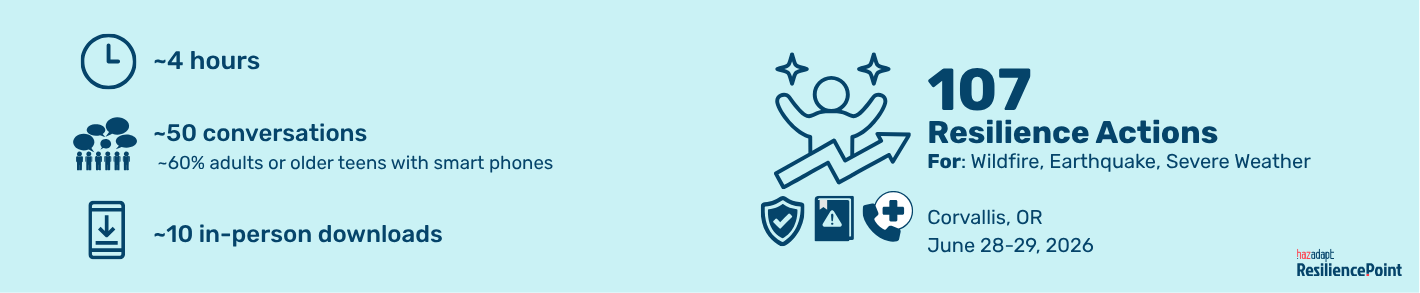
Read on for an example of impactful outreach at Open Streets 2026, where one tried-and-true strategy keeps proving to be a winner: Bring the fun, keep it simple, create intentional engagement loops. At open streets, that looked like playing the crowd favorite Wheel of Hazards and then sharing a hazard-specific QR card. On the day of and the day after the event, we saw 107 Resilience Actions happen in the area across Wildfire, Earthquake, and Severe Weather with safety information in HazAdapt.
The kind of impact that makes the most difference: real people taking meaningful steps toward preparedness.
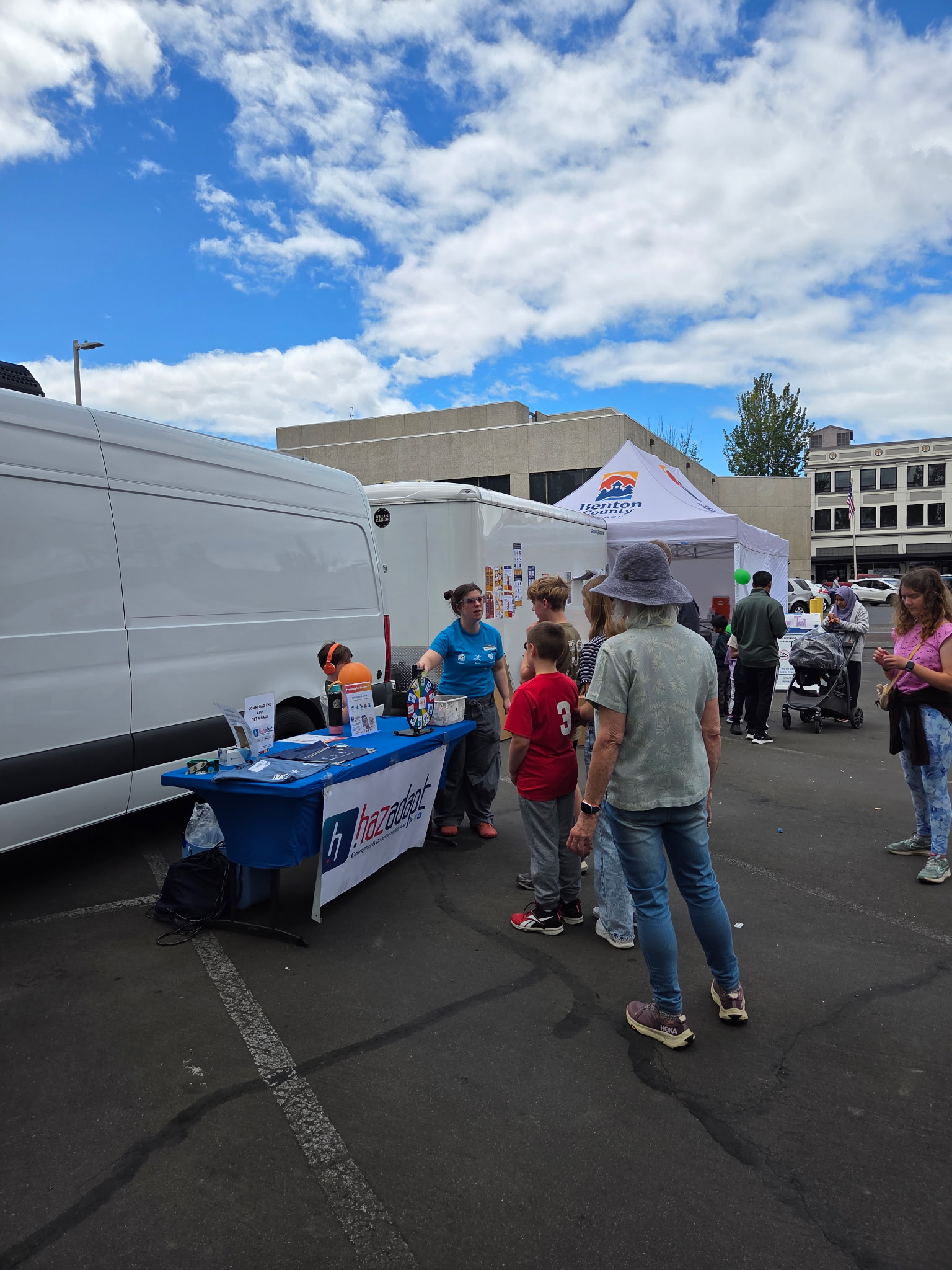
Open Streets is a fun parade and community event spanning about a mile of closed city streets with 60+ local community vendors, live music, and family-friendly activity zones 2,000+ people, mostly families, join. This was HazAdapt's third year participating alongside Benton County Health by the cooling tent, and is one of our favorites of the many community outreach events we support throughout the year.
This audience is here for safe fun and local connection. It's an excellent environment for creating a positive memory and resource connection point between safety leaders and the public. We love the opportunity to connect with all ages and to study one of the most important engagement points between local authorities and the public: community tabling.
Parades, festivals, preparedness fairs, cooling centers, and local gatherings are where agencies often get to meet people face-to-face without the pressure of a longer class-like training or being in the middle of an emergency.
In these moments, local safety teams are more approachable— both physically and psychologically— to answer questions, build trust, and share safety information before an emergency happens.
But too often, outreach still looks like a table full of paper pamphlets, cards, brochures, and multiple QR codes for the public to scan.
Staff was there. Some materials were handed out. A few people stopped by.
Then everyone walks away with the same hard-to-answer question:
That is a question HazAdapt and ResiliencePoint were built to help answer.
At busy community events, people are walking, biking, pushing strollers, watching kids, listening to music, stopping for food, and moving through a lot of activity.
They are there to enjoy the day. Compound that with the overall shortening attention span, stressed-out cognitive dissonance, and instant gratification habits prominent in today's society, and it's safe to say that getting community members to get excited about a not-so-fun topic, like disasters, can be challenging.
Meaning, you only have a few seconds to help someone decide whether they should stop at your table. If they do stop, they'll likely stay less than 3 minutes, and that's only if the 3 minutes include fun or prizes.
It's a short interaction, but research shows again and again that in-person connection and outreach can make a meaningful difference in long-term trust and action. (BMC Global and Public Health, 2024)
So, it needs to be clear, useful, and easy to remember later.
That's where the fun comes in-- which usually does not look like a pile of brochures at a parade.
I know. We love all the brochures. I know you spent hours making them and the budget to print them.
But the reality is, the value of the information often struggles to overcome the challenges of the physical environment. They may not have a bag. They may not want to carry materials for the rest of the event. Your flyer has more chance of becoming a napkin than it does getting saved in a safety binder. As for alert signups and multiple apps, they may not be ready to download and create accounts in that exact moment.
But they are ready to have fun.
For us, the Wheel of Hazards is our go-to tabling fun engagement tool that can be customized to local hazards, be modified on the fly to play with all ages, and can make a scary conversation actually enjoyable and educational. [Read more about the Wheel of Hazards Game here]
This is one of the events we've found that sharing a single hazard-specific card with one clear QR code does this job better than you expect.
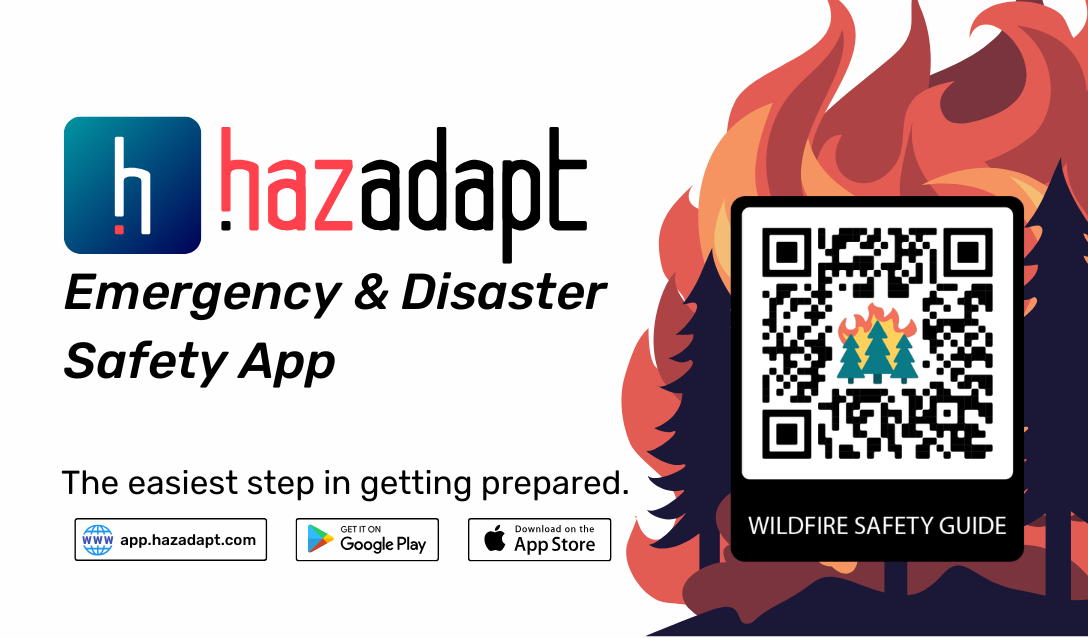
Rather than only advertising the agency or focusing solely on the apps to download, it centers the next step around a hazard as a quick information handoff. The QR code takes people directly to a specific HazAdapt Hazard Guide, where they can open trusted step-by-step preparation, emergency actions, and recovery instructions and resources for wildfires.
What makes it easy for them: no downloading the app or making an account, but they still get instant access to 60+ easy-to-use hazard guides and local safety information. Talk about little effort yielding big returns.
Sure, where to download the app is listed on there, but the card is intentionally more than an advertisement. It gives people immediate access to useful safety information. In this case, wildfire and wildfire smoke safety information.
It is easy to hand off, easy to put in a pocket, easy to scan later, and easy to share with someone else. We've heard people say "Oh I'll scan this and then make sure my family members have this!" or local volunteers comment "Wildfire conversations come up in my neighborhood all the time-- so I keep a QR Card in my wallet to share the resource quickly."
If they need a folder or a clip to keep all of your handoff resources together, that's more work and a higher likelihood they won't take the resources or toss it if they get too inconvenient to carry.
%20(7).png)
That is why we, HazAdapt, use business card-sized outreach handouts for busy public events. They are designed to be easy to keep and make taking the next step simple: connect people to the HazAdapt Safety App and Hazard Guides where local alert sign-ups, official websites, maps, crisis contacts, and preparedness tools await them.
The public gets one clear resource they can use when they need it, given to them in a way that supports long-term adoption conditions.
What makes it easy for emergency managers, public health teams, and safety partners to get an easy tool to share during outreach: "A safety app that makes preparedness and emergencies easier."
And then with the ResiliencePoint engagement dashboard, local safety teams can also see how people meaningfully take action afterward.
Read that last part again. Because this is the first time a tool has made it possible to visualize this missing insight of continuous community resilience impact.
Across the board, if you ask safety leaders how they know their outreach is working, they'll often cite the only KPIs they have access to:
Surface Level Reach Counts
- My post got [x] likes, impressions, or shares.
- We handed out [x] pamphlets or swag items.
- We counted [x people] who came to the table.
Deeper Insights with Limited Scope
- "We did a survey on preparedness some time ago and got some answers there!"
- "Multiple community members came up to me to tell me their story about their preparedness growth."
Actual Preparedness Action with Standardized Metrics
- [X] people signed up for alerts
- [X] New followers to official accounts (connecting to a trusted channel for safety info)
- [X] New volunteers signed up
While these indicators of engagement can be useful, the systems that generate them weren’t designed to capture and indicate meaningful, continuous resilience activity happening in the community. The resulting evidence of impact is a fuzzy image at best, with the most critical parts of the picture missing entirely.
If we find a pinch of flour spilled on the floor and there’s a smell of bread in the air, we can start to infer that it’s very possible bread was made in this kitchen recently.
But if our goal is to make sure we actually have bread to eat later, we can’t just go off of an accidental mess and a smell. We need to see the actual bread because that’s what actually feeds you.
In the same way, likes and shares on social media are not truly substantial public preparedness metrics. There are many social and algorithmic reasons that people like or engage with a post, but reading the post and taking subsequent action is not required.
And, as much as those community member stories are meaningful and touch our hearts– if you had a dime for every time you heard a story from a community member telling you they took action, most of us would probably still have less than $2 a year.
(Which, side note: 20 stories would actually be pretty impressive given that safety leaders often get little or no regular feedback from the public on their preparedness.)
Stories are amazing qualitative indicators and should be documented, printed, framed, saved, and revisited with quantitative supporting evidence. They are worth celebrating because we know that even one prepared person in a neighborhood or area can make a difference for many others. Communicated experiences are also the backbone of relationships. But one enthusiastic story doesn't mean everyone else is doing the same – or even that this person will keep it up. It's easy to want that to be true, and to let that hope run further than the evidence supports –especially when you're hungry for proof your hard work is making a difference.
Stories are the delicious aroma wafting in the kitchen– one of the best and strongest indicators that bread was baking here– but not as substantial as the actual bread when it comes down ot it. The smell may delight you, but we all know that smells alone do not fully satisfy, and often, they can make hunger worse.
Stories leave us looking for more substantial indicators and ways to measure and scale preparedness, especially when you have to communicate to your leadership and funding how you “produced measurable resilience” that is “maximizing personal agency” . (Terms sourced from the National Resilience Strategy June 2026 White House Release.)
That's the tough part about stories.
The reality is, we need more substantial impact evidence and measurement to goes further than “we handed out materials”, “someone scanned the QR code.” “A Multiple people have told me they ‘took action.’”
Going deeper into what really helps create a clearer picture of local preparedness:
Did they read, save, or share safety information that could help them or others prepare, respond, or protect themselves and others? Did they test their knowledge and plan? Did they test their knowledge and plan? Did they prepare supplies? Coordinate crisis contacts? How will this progress assist with other hazards?
These are some of the real metrics of coping capacity and meaningful resilience action we’re looking for– and what we’re finally able to see with the HazAdapt + ResiliencePoint Engagement Loop.
%20(10).png)
Most of the immediate HazAdapt activity we see after outreach is people intentionally accessing trusted safety guidance in the Hazard Guide. In many cases, intentionally reading safety information is the first protective action a person takes before deciding what to do next.
This is an “active engagement” preparedness action, not a “passive engagement” like scrolling a feed and seeing a safety post, or putting a brochure in a backpack. When someone uses HazAdapt, they are taking intentional action and interacting with high-quality safety information and resources in a highly focused space.
So, rather than just trusting your roommate's word that they are a champion baker, you’re giving them a bakery with the finest ingredients and taking a seat at the counter. Now, you’ll be able to not only get to see what kind of breads they are making (what hazards they are preparing for), but you’ll be able to see a more immediate view into where they are in the baking process (how much action have they taken and what level of preparedness they are at). All the while, they are just enjoying the free bakery (the free safety app, HazAdapt) and making the baked goods of their dreams (preparing, taking just-in-time action, and recovering from different hazards with HazAdapt).
When local agencies see resilience activity spikes after outreach, it gives them a clearer signal that the sharing moment mattered and your community member was empowered. It’s an indicator of trust and well-placed investment.
Whether that resource was shared by an emergency manager, a public health team, a police officer, a community partner, or a neighbor, the goal is the same: help more people take meaningful steps towards their own resilience.
That is what we want to see grow: real public engagement with safety information, real preparedness actions, and visible signs of resilience growing in the community.
A great welcome line, The Wheel of Hazards, and other people having fun at your table brings people in.
The lighthearted conversation built trust.
The card gives people a lightweight parting asset and a simple next step.
HazAdapt gives them safety information and crisis resources ready for use 24/7/365, without overwhelming them.
ResiliencePoint helps local safety teams see what happened next, including when one shared guide led people to explore additional preparedness information.
That is the engagement outreach loop that makes a real difference:
Easy to share.
Easy to keep.
Easy to use.
Easy to act on.
Easy to measure in a meaningful way.
With the HazAdapt and ResiliencePoint system, safety teams can share more in a shorter amount of time, with less effort.
That leaves more time for relationship-building in the moment and gives local authorities more visibility into the longer-term impact.
Instead of ending the story with “we handed out materials,” local teams can start showing how people used those resources to take action and become more prepared.
At this year’s Open Streets, we saw early signs that people were engaging with the resource and taking action.
🗣️ Relationship building: Ginny, HazAdapt founder and Community Partner, was at the HazAdapt table spoke with about 50 people in roughly 4 hours. Around 60% were teens and adults with smartphones. (Will bring next time: A clicker to make counting easier.)
📲 Resource adoption: We saw about 10 app downloads happen right in front of us, with several more people saying they would download later. App store reporting can take a few days to fully settle, so we are watching those numbers continue to update. So far, at least 20 downloads in that time frame.
✅ Public Resilience Actions: At Open Streets, we shared a hazard-specific card for the Wildfire guide. On the day of the event and in the day after, we saw 107 Resilience Actions in Corvallis, with people interacting with Wildfire, Earthquake, and Severe Weather safety information in our Hazard Guides.
That is the impact we care about most: real people taking meaningful steps toward preparedness.
For local emergency management, public health, and community safety teams, outreach happens again and again. It takes time, preparation, energy, and care.
It may be a less-than-three-minute interaction repeated dozens or hundreds of times, but those interactions can make a significant difference in your community.
At HazAdapt Community Resilience Tools, our goal is to help make that work easier and more effective for both the people doing the outreach and the public they serve.
We are here to support your work, extend your outreach efforts, help more people engage with safety information, and help you see resilience grow in your community.
Thanks again to Benton County Health and everyone who stopped by to spin the Wheel of Hazards with us at Open Streets 2026.
__
HazAdapt is a free emergency and safety app available in app stores and online at app.hazadapt.com.
Emergency managers and local safety leaders can find no-cost outreach support resources here:
https://www.hazadapt.com/provider-resources/outreach-resources
Interested in seeing resilience grow in your community? Request your ResiliencePoint access here: https://rp.hazadapt.com/interest
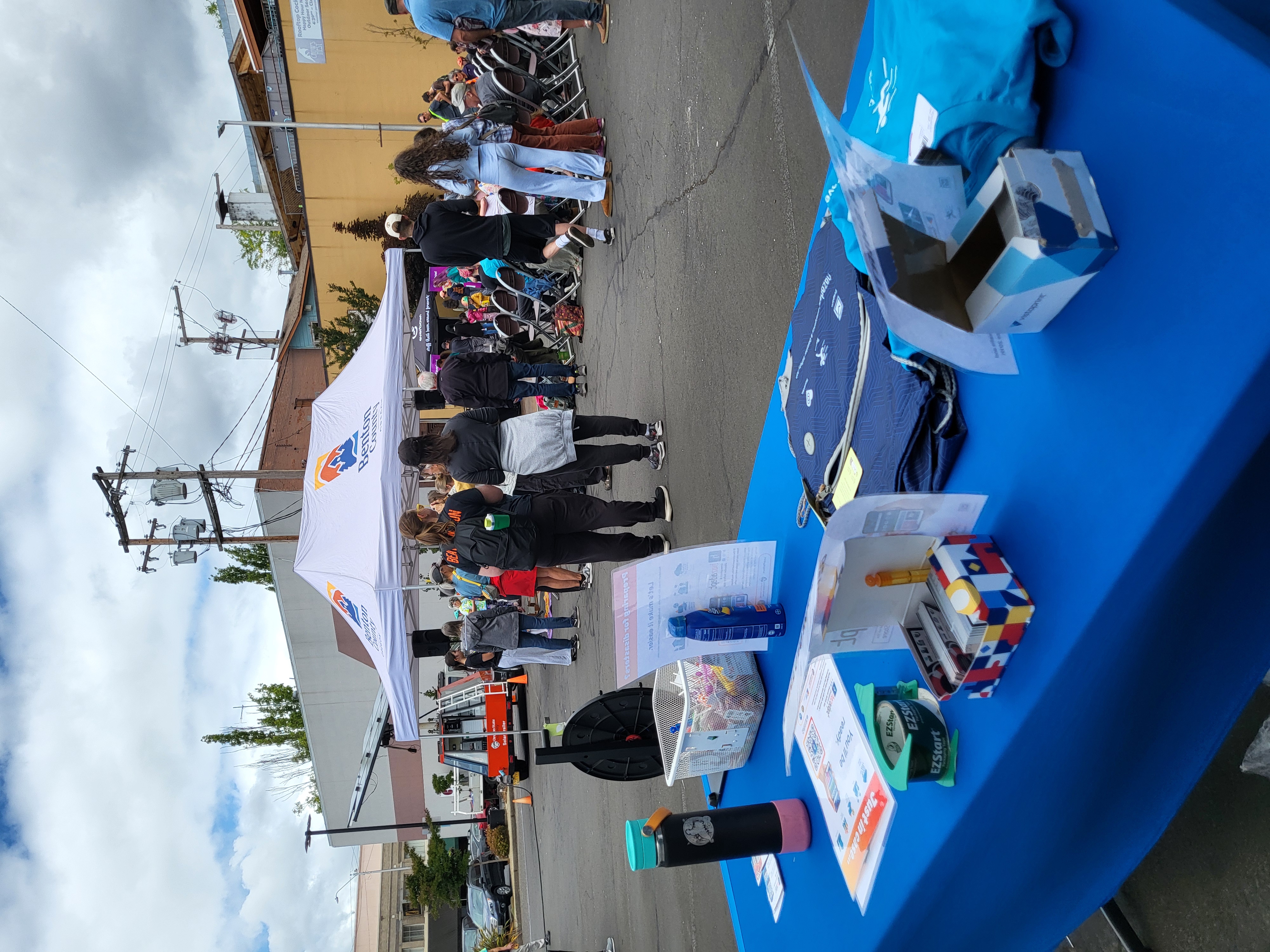
Photos from Open Streets 2026
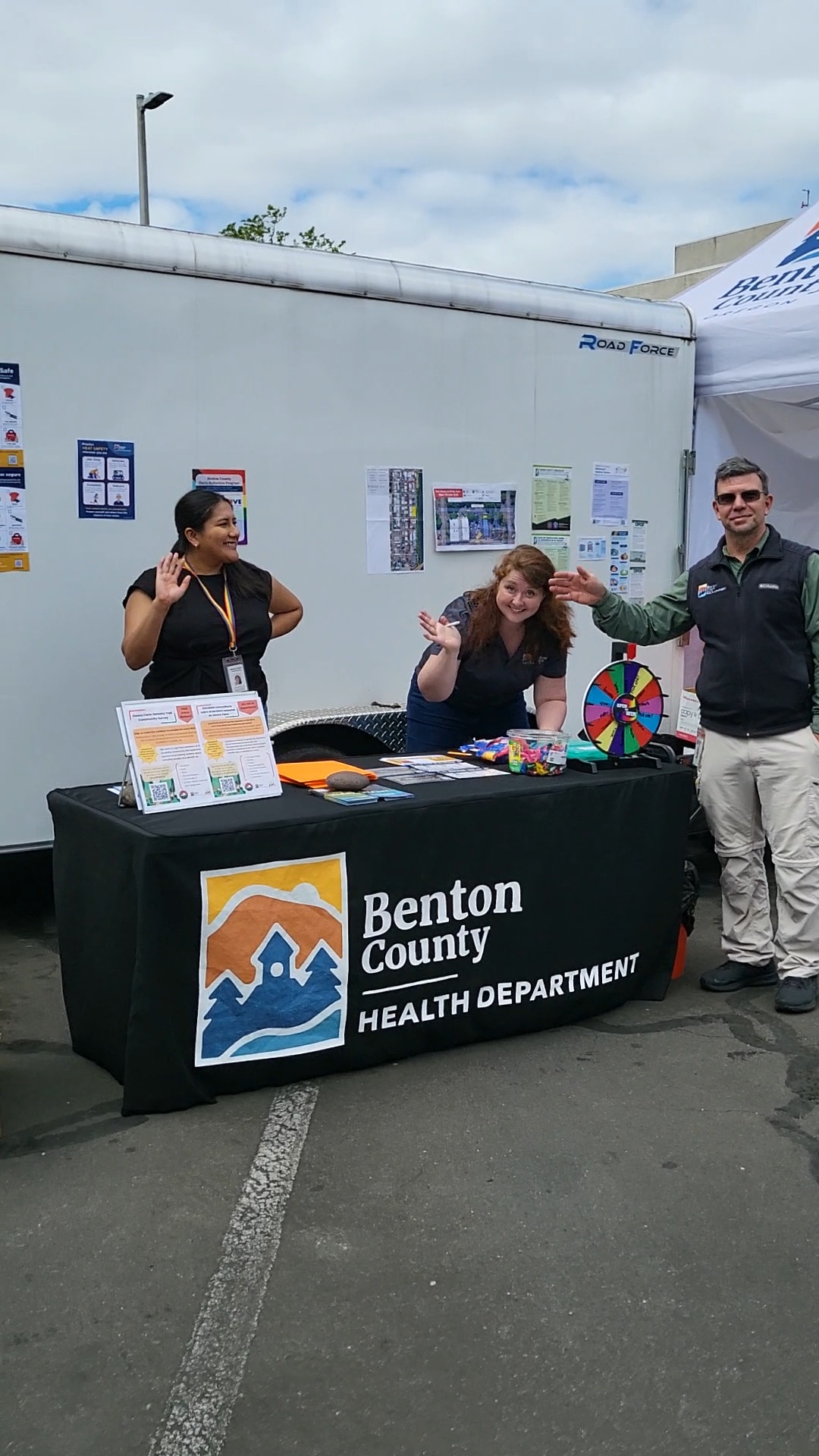
Benton County Health PartnersOur friends at Benton County Health welcoming the community at Open Streets 2026. We were grateful to participate alongside their cooling tent again this year and support community health, safety, and preparedness together.

.jpg)


